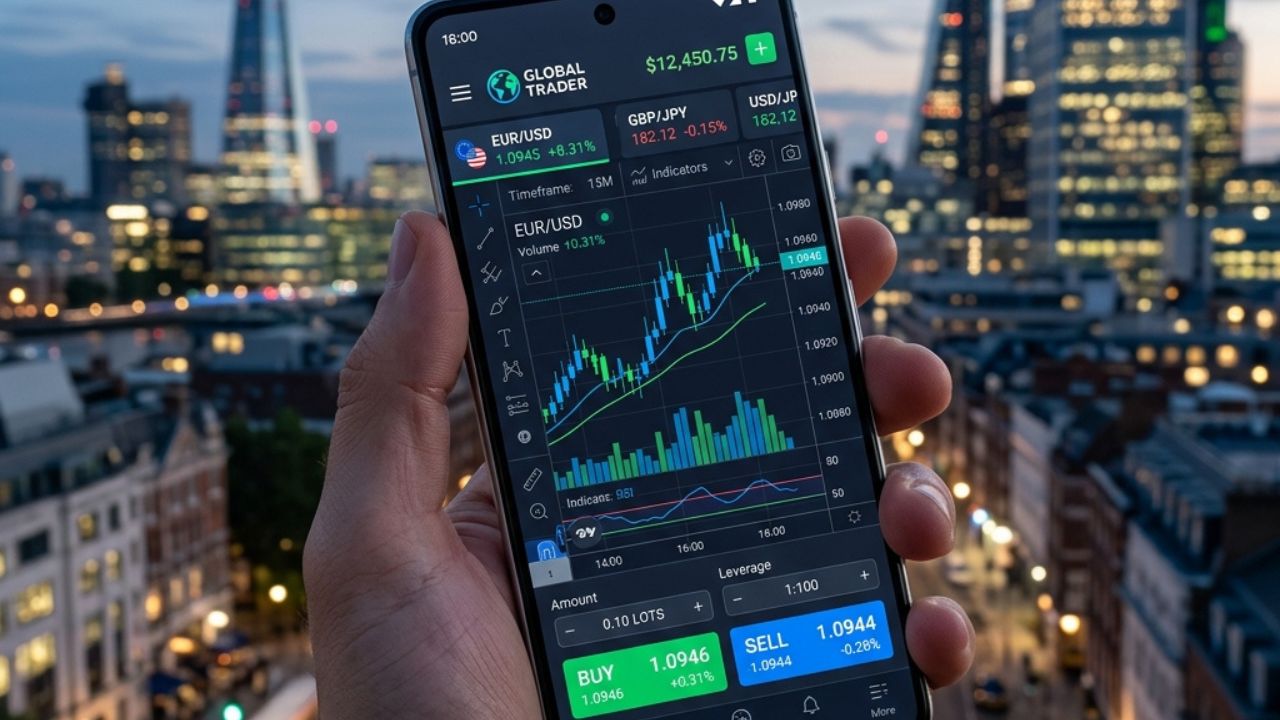
The best Forex trading apps in the USA prioritize strict regulatory compliance, low trading costs, and reliable execution. Beginners should select user-friendly platforms offering demo accounts and robust educational resources. Experienced traders should choose apps featuring advanced charting tools, algorithmic trading support, and deep market liquidity across diverse currency pairs.
The foreign exchange market is the largest financial market globally, processing trillions of dollars in daily transactions. Retail traders participate in this market by speculating on the fluctuating exchange rates between different global currencies. Mobile technology has fundamentally changed how individuals interact with these markets.
Modern trading applications give users direct access to global currency markets directly from their smartphones. These mobile platforms have transitioned from simple monitoring tools into comprehensive trading terminals. A reliable mobile application allows you to execute trades, analyze technical charts, and monitor breaking financial news from any location.
Finding the right platform requires matching the app’s capabilities with your personal trading experience. Beginners need intuitive interfaces that prevent costly mistakes during the learning phase. Expert traders require execution speed and complex analytical tools. This guide breaks down exactly what you need to know to select the right trading platform for your specific financial goals.
Which Forex trading apps are best for beginners?
New traders face a steep learning curve when entering the currency markets. The most effective mobile platforms for beginners focus on education, simplicity, and risk reduction.
Why are user-friendly interfaces and demo accounts critical?
A cluttered trading screen easily overwhelms new market participants. Top platforms for beginners prioritize clean navigation and clear order entry tickets. You need to understand exactly how much capital you are risking before confirming a trade.
Demo accounts are mandatory for anyone starting their trading journey. These simulated environments use virtual funds, allowing you to practice executing trades and testing strategies without risking actual capital. You should practice on a demo account until you consistently generate simulated profits over several months.
How do educational resources and customer support help?
The best beginner apps integrate learning directly into the mobile experience. Look for platforms offering embedded video tutorials, glossary definitions, and daily market breakdowns. Direct access to customer support is equally vital. When you encounter a technical issue or misunderstand a margin requirement, responsive customer service can prevent significant financial losses. Top-tier brokers provide 24/7 support via live chat directly within the mobile app.
What should you expect regarding minimum deposits and commissions?
Starting with small capital helps mitigate early mistakes. Beginner-friendly platforms often feature low minimum deposit requirements, sometimes allowing you to open an account with as little as $50. Additionally, look for platforms with transparent pricing structures. Many consumer-focused brokers offer zero-commission trading, generating their revenue solely through the bid-ask spread.
What do experts need from advanced Forex trading apps?
Experienced traders possess specific requirements that go beyond basic buy and sell functionality. Professional-grade applications must deliver speed, reliability, and deep technical capabilities.
Which advanced charting tools and technical indicators matter?
Professional traders rely heavily on technical analysis to forecast price movements. Advanced mobile applications must support complex charting packages. This includes the ability to overlay multiple indicators, such as moving averages, Bollinger Bands, and Fibonacci retracements. The app must allow for custom timeframes and seamless zooming without lagging. Reliable charting tools enable experts to identify precise entry and exit points directly from their mobile devices.
How do mobile apps handle automated trading and algorithmic strategies?
Many experienced traders use algorithmic strategies to execute trades based on pre-defined mathematical rules. While complex algorithmic coding typically happens on desktop platforms, top mobile apps allow users to monitor, pause, or adjust these automated systems remotely. Integration with platforms like MetaTrader 4 (MT4) or MetaTrader 5 (MT5) is highly desirable, as these industry-standard ecosystems support extensive algorithmic trading capabilities.
How do experts manage leverage and diverse currency pairs?
In the United States, the Commodity Futures Trading Commission [CFTC, 2023] caps retail Forex leverage at 50:1 for major currency pairs and 20:1 for exotic pairs. Expert platforms provide seamless access to these maximum allowable limits. Furthermore, experienced professionals look beyond the standard EUR/USD or GBP/USD pairs. They require access to a wide variety of minor and exotic currency pairs to capitalize on specific geopolitical events and global macroeconomic trends.
What are the key features to consider when choosing a Forex trading app?
Evaluating a trading platform requires a systematic approach. You must scrutinize several technical and administrative features before depositing your funds.
Why is strict regulation and security non-negotiable?
Security is the most important factor when selecting a broker. In the USA, a legitimate Forex broker must be registered with the Commodity Futures Trading Commission (CFTC) and be a member of the National Futures Association (NFA). These regulatory bodies enforce strict capital requirements and operational standards to protect consumer funds. Never deposit money into an offshore app that lacks NFA membership. Additionally, ensure the application utilizes two-factor authentication (2FA) and biometric login protocols to secure your account.
How do trading costs affect your profitability?
Trading costs directly impact your bottom line. You must understand how your broker charges fees:
- Spreads: The difference between the buy and sell price. Choose brokers offering tight spreads, especially during peak trading hours.
- Commissions: Some brokers charge a flat fee per lot traded alongside a very tight spread. Choose a commission-based account if you trade frequently in large volumes.
- Swaps: If you hold a position overnight, you may pay or receive interest based on the interest rate differential between the two currencies.
What other assets and currency pairs should be available?
A robust platform offers dozens of currency pairings. While you may start by trading major pairs, having access to minor and exotic pairs provides valuable portfolio diversification. Some brokers also offer access to other asset classes, allowing you to hedge your currency exposure with other financial instruments.
How do deposit and withdrawal methods function?
Liquidity means having access to your money when you need it. Review the broker’s deposit and withdrawal policies. Standard methods include bank wire transfers and automated clearing house (ACH) transfers. Check for hidden withdrawal fees and typical processing times. A reputable broker processes withdrawal requests within one to three business days.
How do you get started with a Forex trading app?
Transitioning from downloading an app to executing your first live trade involves a structured onboarding process.
What is required for account registration and verification?
US regulations require financial institutions to verify the identity of their clients. During registration, you must provide your legal name, physical address, and Social Security Number. You will also need to upload a government-issued ID and a recent utility bill to verify your residence. This “Know Your Customer” process typically takes a few days to clear.
How do you fund your trading account?
Once verified, navigate to the app’s funding section. Link your bank account and initiate an ACH transfer. Start with an amount of risk capital that you can entirely afford to lose. Forex trading carries inherent risks, and you should never trade with money needed for essential living expenses.
How do you place your first trade?
Select your desired currency pair and open the order ticket. Decide whether you want to buy (go long) or sell (go short). Choose your position size carefully. Most platforms allow you to trade micro-lots, which represent 1,000 units of currency. This smaller sizing is ideal for new traders managing risk.
Why are risk management strategies vital?
Never execute a trade without setting a stop-loss order. A stop-loss automatically closes your position if the market moves against you by a specified amount, protecting your account from catastrophic losses. Professional traders generally risk no more than 1% to 2% of their total account equity on any single trade.
What are the pros and cons of using Forex trading apps?
Mobile trading platforms offer unique advantages but also present specific behavioral challenges.
What are the main advantages of mobile trading?
The primary benefit is absolute accessibility. Mobile apps deliver real-time pricing data and breaking financial news directly to your pocket. You can manage open positions, adjust stop-loss orders, and execute new trades regardless of your physical location. This flexibility is crucial in a market that operates 24 hours a day, five days a week.
What are the primary disadvantages and risks?
The convenience of mobile apps can lead to dangerous over-trading. Because the market is always accessible, traders may feel compelled to place trades constantly, leading to emotional decision-making. Furthermore, mobile devices rely on cellular networks. A dropped connection during a volatile market event can result in significant financial loss if you cannot exit a position.
Final thoughts on mobile Forex trading
Choosing the correct mobile application dictates the foundation of your trading career. Beginners must prioritize intuitive design, educational resources, and fully functional demo accounts to build their skills safely. Expert traders must seek out rigorous regulatory compliance, deep market liquidity, and sophisticated charting capabilities to execute complex strategies.
Treat Forex trading as a disciplined business venture rather than a casual mobile game. Download a reputable, NFA-regulated application today, open a demo account, and begin developing your trading strategy in a risk-free environment.
Frequently Asked Questions
What makes a Forex trading app legal in the USA?
A Forex trading app is legal for US residents only if the underlying brokerage is registered with the Commodity Futures Trading Commission (CFTC) and holds membership with the National Futures Association (NFA). Always verify a broker’s NFA ID number on the official regulatory website before depositing funds.
Can I actually make money using a Forex trading app?
Yes, generating a profit is possible, but it requires strict risk management, extensive market knowledge, and emotional discipline. Retail Forex trading carries a high risk of loss, and a significant percentage of retail accounts lose money. Mobile apps provide the access, but your personal strategy determines the outcome.
What is the difference between a demo account and a live account?
A demo account simulates real market conditions using fake, virtual money. It allows users to test the platform and practice strategies without financial risk. A live account uses actual deposited capital, meaning real financial gains and real financial losses.
How much money do I need to start trading Forex on an app?
Many US-regulated brokers allow you to open an account with zero minimum deposit, though realistic trading requires initial capital. Starting with $100 to $500 is common, utilizing micro-lots to keep position sizing small while you learn risk management mechanics.
Should I choose an app with high leverage?
In the USA, leverage is legally capped at 50:1 for major currency pairs to protect retail investors. While leverage amplifies potential profits, it equally amplifies potential losses. Beginners should use leverage extremely cautiously and rely on strict stop-loss orders to protect their account balances.